SCENE
PRODUCT DESIGNER
PERSONAL PROJECT
2026

THE QUESTION
What gets in the way between wanting to try something and actually trying it?
I wanted to understand why curiosity so often stops before action.
Is it because there are too many choices?
Because getting started feels overwhelming?
Because committing to something unfamiliar feels like a risk?
Or because people simply don't know what the first step looks like?
This became the question that shaped my research.
THE PROBLEM
People want to try new things, but turning curiosity into action isn't easy.
Discovering something interesting is easy. Taking the first step is where the friction begins.
People often face too many choices, uncertainty about where to start, fear of committing to something unfamiliar, or simply lose momentum after the initial excitement.
Existing discovery platforms help people find things to do. But they rarely help them move from “I want to try this” to actually experiencing it.
RESEARCH
So I went looking for the gap.
I wanted to understand why people hesitate to turn curiosity into action, how they currently discover new experiences, and what makes them actually take the first step.
RESEARCH GOALS
Understand motivations behind trying something new
Identify barriers that prevent people from getting started
Explore how people currently discover activities and experiences
Understand what makes an experience feel worth pursuing
Identify opportunities to make exploration easier and more engaging
RESEARCH FINDINGS
The problem wasn't a lack of curiosity. It was everything that came after.
Through the research, a few recurring patterns began to emerge:
“I want to try it, but I don't know where to start.”
“There are so many options that I end up doing nothing.”
“I'd rather try something casually before committing to it.”
“I get excited about new things, but the excitement doesn't always last.”
“Doing something new with other people makes it easier to actually go.”
EMPATHY MAP
Understanding the mindset behind the behaviour
The empathy map helped reveal the gap between wanting to explore new lifestyles and actually taking the first step.
Across the research, users showed a consistent pattern: they are naturally curious and inspired by new experiences, but too many choices, uncertainty, limited time, and lack of guidance often turn curiosity into hesitation.

KEY INSIGHTS
The research pointed to four opportunities.
01: MAKE THE FIRST STEP EASIER
People don't necessarily need more options. They need a clear, approachable way to begin.
02: MAKE EXPERIMENTATION FEEL LOW-RISK
Trying something new becomes easier when it doesn't feel like a long-term commitment.
03: TURN CURIOSITY INTO MOMENTUM
A spark of interest needs structure, prompts and small actions that keep it moving.
04: MAKE EXPLORATION FEEL SHARED
Community can turn an unfamiliar experience into something more motivating, social and memorable.
THE PEOPLE
Two people. Two different reasons to explore.
SCENE was shaped around two distinct types of explorers- one still figuring out what she enjoys, and one who already knows what matters to him but struggles to make space for it.


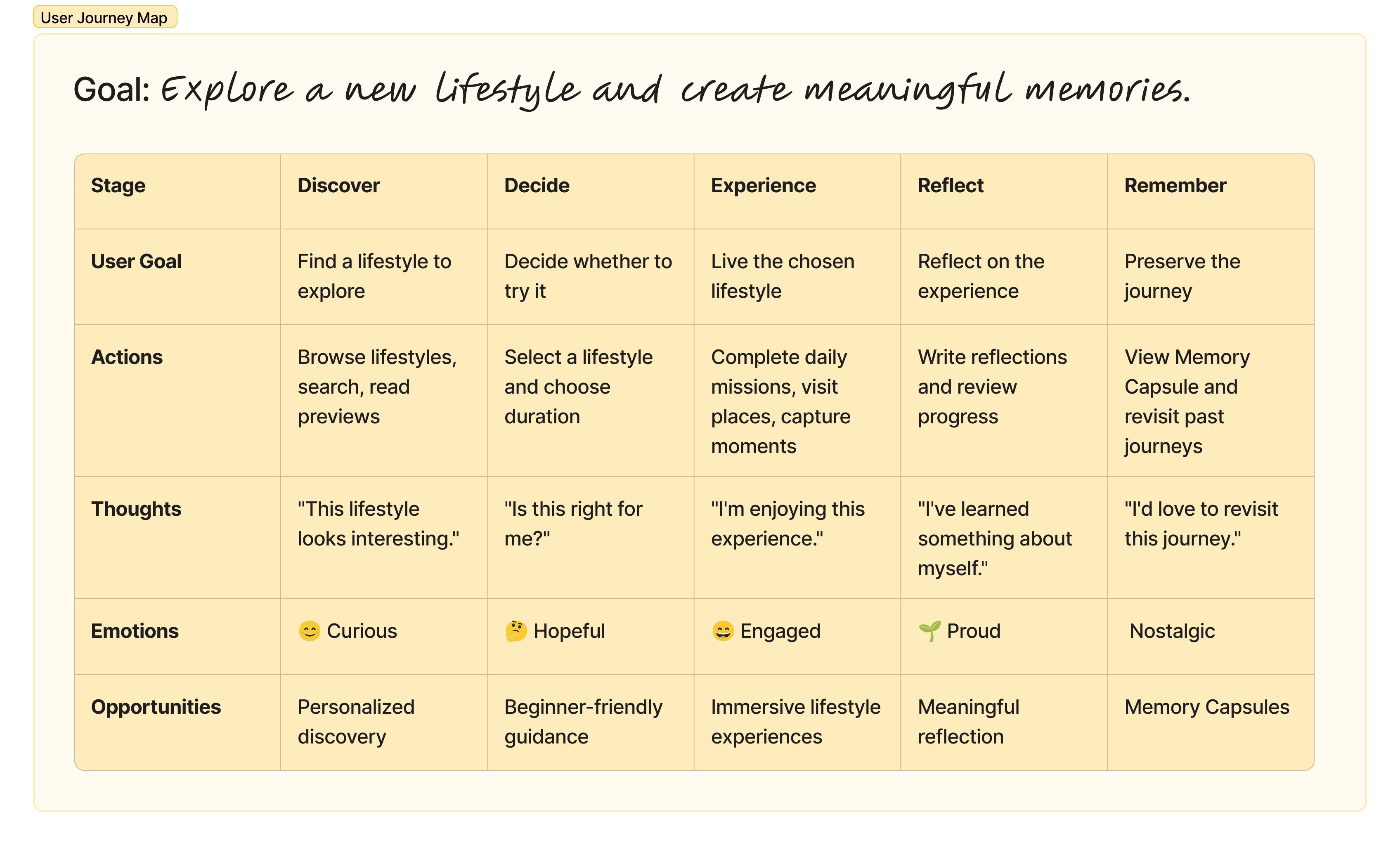
User Journey MAP
Goal: Explore a new lifestyle and create meaningful memories.
Journey:
Discover → Decide → Experience → Reflect → Remember
JOBS TO BE DONE
When I feel stuck in the same routine,
I want to discover a new way of spending my time,
so I can experience something different and learn whether it fits me.
When I discover something I’m curious about,
I want to try it without a long-term commitment,
so I can explore it without the pressure of getting good at it.
When I decide to try something new,
I want to know exactly what to do next,
so I can turn curiosity into action instead of abandoning it.
User NEEDS
Users need a simple, flexible, and meaningful way to explore different ways of living, one that helps them move from curiosity to action, discover what fits them, and create experiences worth remembering.
PROBLEM
The gap between curiosity and action
People are curious about new lifestyles and experiences, but existing discovery platforms often stop at helping them find something interesting.
They don't necessarily help people overcome the uncertainty, commitment, and lack of structure that comes with actually starting.

DESIGN CHALLENGE
How might we design a product that encourages people to explore different ways of living through meaningful experiences, helping them discover new sides of themselves and create lives worth remembering?
OPPORTUNITIES AREA
01: Make exploration feel approachable
Reduce the friction between “I want to try this” and actually starting.
02: Curate instead of overwhelm
Help people discover relevant lifestyles without endless scrolling and choice overload.
03: Make experimentation feel safe
Give people structured, time-bound ways to try something before deciding whether it belongs in their life.
04: Turn experiences into self-discovery
Help people reflect on what they enjoyed, learned, and discovered about themselves.
05: Make memories part of the experience
Give people a way to capture and revisit the experiences that become meaningful to them.
INTRODUCING

SCENE
Live a life worth remembering
HOW SCENE WORKS
THE PRODUCT SYSTEM
INFORMATION ARCHITECTURE


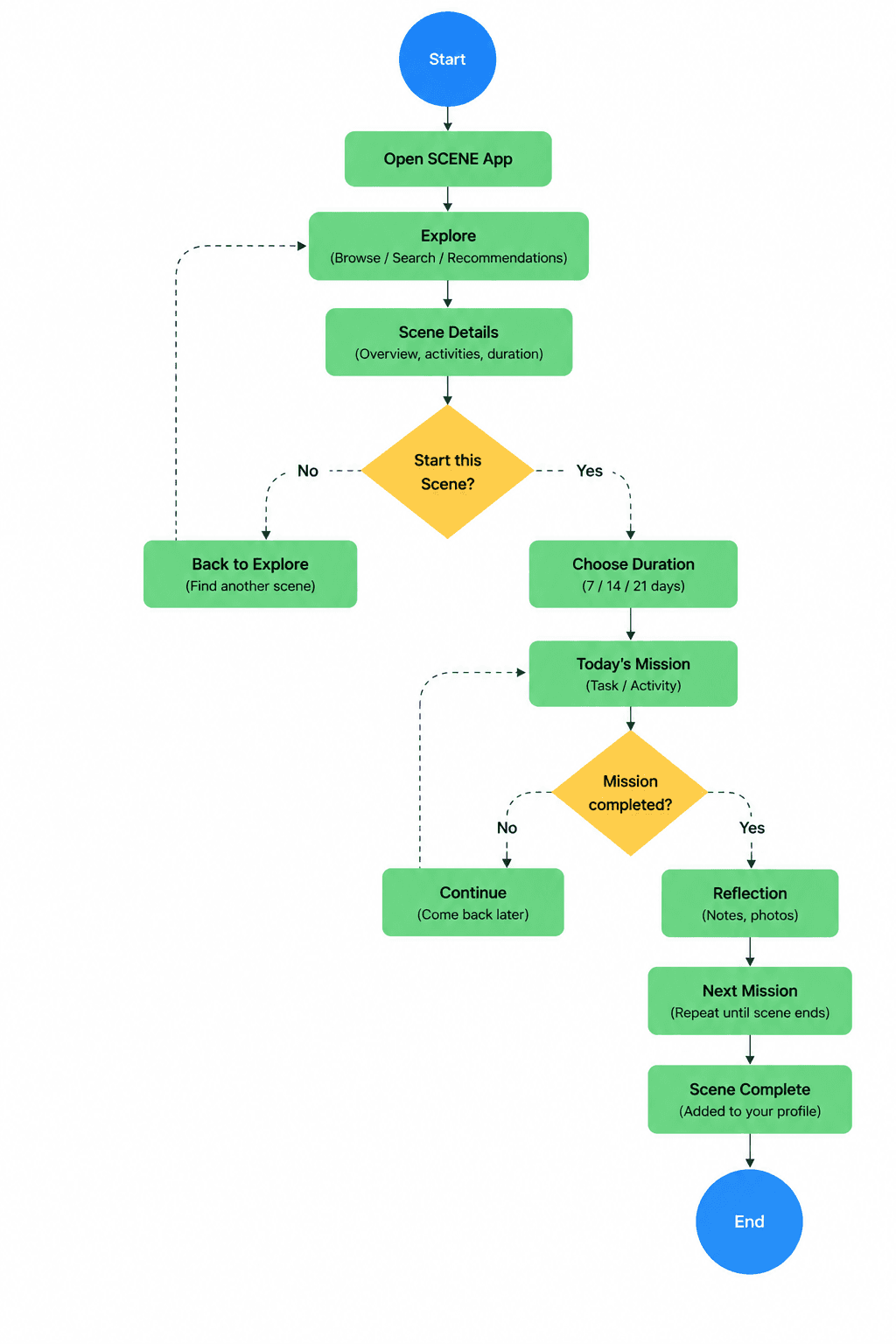
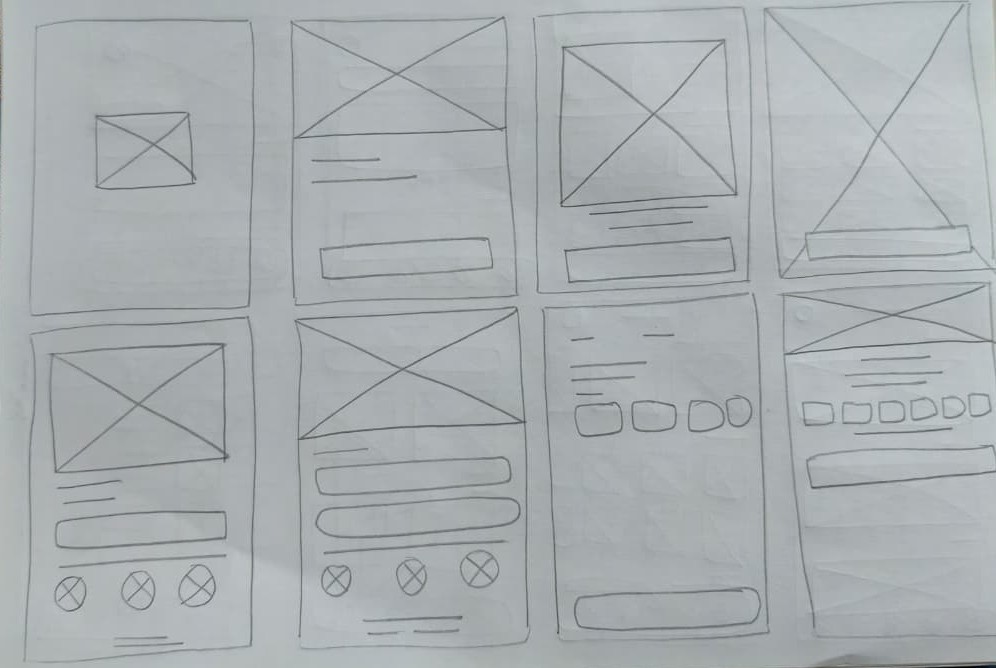
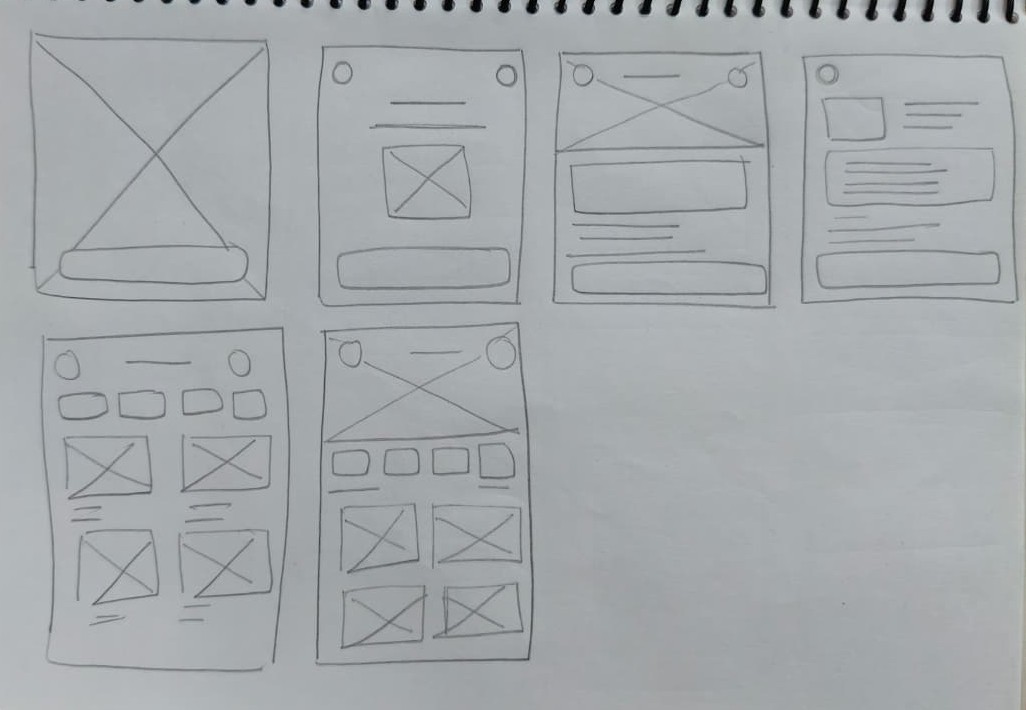
NOW LET’S TURN THE SYSTEM INTO AN EXPERIENCE.
From structure to screens — mapping how SCENE guides people from curiosity to action.
USER JOURNEY FLOW
wireframes

Visual LANGUAGE

FROM A SYSTEM TO A SCENE.
Every decision came together to turn exploration into an experience.
FINAL UI

PROTOTYPE
OUTCOME
LEARNINGS & REFLECTIONS
THE END